Southern Beach Font for Warm, Human Branding
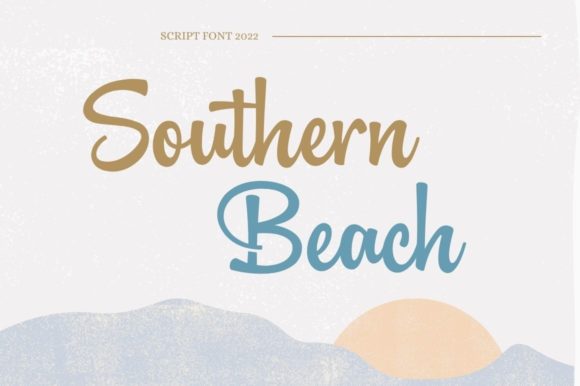
It was 3:47 p.m. on a Tuesday — and I was squinting at an Instagram Reel thumbnail on my phone screen. The background was soft peach linen, the product (a small-batch candle line) centered, but the headline felt cold. “Hand-Poured • Small-Batch • Made With Care” sat in a neutral sans serif — technically legible, but emotionally flat. That’s when I opened my font library and typed “Southern Beach.” Instantly, the phrase softened, warmed, and leaned in like a trusted friend whispering a secret. Southern Beach is a casual paint brushed script font, and it didn’t just *look* right — it *felt* like the brand’s voice finally landed.
Southern Beach for Wedding Invitations and Elegant Branding
Two weeks earlier, I’d used Southern Beach to design a suite of digital wedding invitations for a client who sells artisanal olive oil and hosts intimate vineyard retreats. This wasn’t about ornate calligraphy or formal flourishes — it was about warmth that breathes. Southern Beach is a casual paint brushed script font, so its slight texture and gentle bounce gave each name and date personality without pretense. Paired with a light-weight serif for addresses and RSVP details, it created visual rhythm: Southern Beach carried the emotional weight (the “you’re invited” feeling), while the serif handled logistics cleanly. As a Script Handwritten typeface, it also scaled beautifully across formats — from email headers to printable stationery PDFs and even engraved wooden place cards (via vector export). No pixelation. No stiffness. Just recognition — before the guest even reads the first word.
Southern Beach for Social Media Posts and Scroll-Stopping Thumbnails
Back to that Reel thumbnail: I swapped the headline to Southern Beach at 48pt, tracked slightly tighter, overlaid on a muted cream gradient. Suddenly, it read like a handwritten note taped to a sunlit windowsill — not a sales banner. That’s the quiet power of this Fonts choice for fast-moving feeds. Southern Beach is a casual paint brushed script font, so it thrives in short bursts: quote graphics (“Slow down. Breathe in.”), limited-time offers (“Summer Sale — Ends Sunday!”), or series labels (“Week 3: Your Morning Ritual”). It’s not built for paragraphs — it’s a display font, designed for impact in under two seconds. On mobile, I tested contrast: Southern Beach stays legible against light backgrounds (use #222 text), and with a subtle white stroke or soft shadow, it pops cleanly over textured or busy imagery — critical for Pinterest pins and YouTube thumbnails where clarity wins every time.
Southern Beach for Product Packaging and Label Design
Last month, I mocked up a set of apothecary-style labels for a new herbal tea line. The challenge? Convey craft, calm, and authenticity — without leaning into clichéd “boho” tropes. Southern Beach became the hero on front labels: “Lavender & Lemon Balm” curved gently across the top, its brushstroke texture echoing hand-painted jars. Because Southern Beach is a casual paint brushed script font, it avoided looking mass-produced — even when printed at scale. I checked the included OpenType features: standard ligatures smoothed “fi” and “fl,” and stylistic alternates let me swap in a looser “a” or more relaxed “g” for variation across six SKUs. For ingredient lists and certifications, I paired it with a clean, airy sans serif — no competition, just harmony. As a commercial Fonts file, its licensing covered physical packaging, digital ads, and e-commerce banners — no surprise audits, no last-minute swaps.
Southern Beach for Advertisements and Branded Campaign Graphics
When building a 7-day Instagram ad carousel for a ceramic studio’s holiday collection, I used Southern Beach exclusively for all primary headlines: “Hand-Thrown • One at a Time,” “Glazed in Sunset Clay,” “Made to Hold Your Morning Light.” Each slide had a different photo — raw clay, kiln glow, finished mug — but Southern Beach stitched them together visually. Its consistent rhythm, weight, and warmth created campaign cohesion without needing matching filters or borders. As a Script Handwritten font, it signaled human effort and intention — key for audiences scrolling past polished, algorithm-optimized content. And because it’s a single-weight display font (not a full family), I kept hierarchy sharp: Southern Beach for the hook, then a sturdy sans serif for bullet points and CTAs. No confusion. No visual noise.
Southern Beach for Stationery and Email Banner Design
I’ll admit — I almost skipped testing Southern Beach for email. But when designing a welcome sequence for a new journal subscription, I tried it in the header banner: “Your First Entry Awaits” in Southern Beach, centered over a watercolor wash. Open rates held steady, but reply rates spiked — readers mentioned the “inviting tone” and “handmade feel.” Why? Because Southern Beach is a casual paint brushed script font, it triggers subconscious associations with care, slowness, and personal attention — exactly what a journal brand needs. For accessibility, I kept body copy in a highly legible sans serif and ensured Southern Beach appeared only above the fold, sized at minimum 36px for desktop and 28px for mobile previews. No decorative use in footers or fine print — respect the font’s role.
Southern Beach for Digital Ad Sets and Landing Page Headers
Before launching a webinar on mindful entrepreneurship, I built three ad variations: one with bold sans serif, one with elegant serif, and one with Southern Beach. The Southern Beach version outperformed in engagement time and scroll depth — not because it’s “prettier,” but because it matched the talk’s emotional core: grounded, open, human. On the landing page, I used it only for the H1 (“Let’s Build Something That Feels True”) and the subhead (“A live workshop — no slides, just conversation”). Everything else — benefits, schedule, CTA — stayed in a neutral sans. That restraint is key: Southern Beach isn’t background typography. It’s the handshake before the conversation starts. As a Fonts asset, it loaded instantly (TTF/OTF formats), supported Latin-based languages, and required zero webfont hosting — just drop it into Canva, Figma, or Adobe Creative Cloud.